
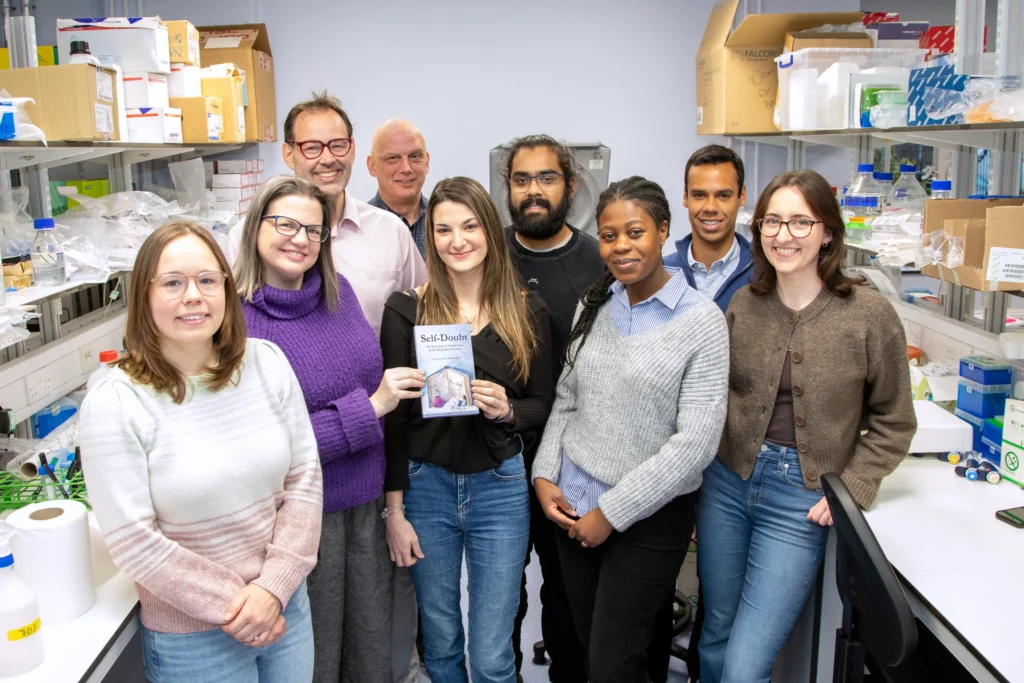
Behind the Breakthroughs: Cambridge Scientists Reveal the Hidden Struggles Behind Their Success
Success in academia is often portrayed as a steady climb fueled by intelligence, discipline, and groundbreaking discoveries. Yet beneath the surface of many accomplished careers lies a quieter reality—one shaped by uncertainty, rejection, and persistent self-questioning. For the first time, a group of researchers from the University of Cambridge are speaking openly about the personal obstacles they have encountered while pursuing excellence in science.
While achievements tend to capture public attention, the path leading to them is rarely straightforward. Failed experiments, declined research proposals, and moments of deep doubt are far more common than most people realize. Because these experiences are seldom discussed, many early-career scientists assume they are alone in their struggles.
Adrian Liston, a Professor of Pathology at Cambridge, believes this silence can create a misleading image of success. According to him, people typically see only the milestones—awards, publications, and major discoveries—without recognizing the long series of setbacks that often precede them.
“When you’re not part of someone’s journey, you don’t witness the disappointments that come before the achievements,” he explains. “Admitting that you feel uncertain or unsuccessful can be uncomfortable, so many choose to keep those feelings private. The irony is that most people around you are experiencing the same thing.”
Liston has spent nearly two decades leading a research laboratory alongside Professor James Dooley. Over the years, he has come to view self-doubt not as a weakness, but as a natural byproduct of working in a field driven by curiosity and constant questioning. Scientists routinely explore the edges of human knowledge, testing ideas that may ultimately prove incorrect.
He notes that science is unusual in how success is measured. Recognition often comes from a handful of breakthrough moments—published papers or significant findings—that may follow years of unsuccessful attempts. To outsiders, those highlights can make the profession appear more certain and glamorous than it truly is.
“In reality, much of scientific work involves navigating the unknown,” Liston says. “Most experiments don’t produce the results we hope for. When all you see are other people’s achievements, it’s easy to forget that failure is an essential part of discovery.”
To shed light on this hidden side of academic life, Liston has compiled a newly released book featuring candid reflections from researchers at different stages of their careers. Through these stories, readers gain insight into the anxieties, fears, and resilience that shape the scientific journey.
The message behind the collection is clear: progress is rarely linear, and setbacks do not define one’s potential. By sharing their experiences, these Cambridge scientists hope to normalize conversations about doubt and encourage a healthier perspective on achievement—one that acknowledges both the triumphs and the trials that make them possible.
Ultimately, their openness serves as a reminder that even the most respected experts face uncertainty. Success is not the absence of struggle, but the determination to move forward despite it.
